
How pure obsession builds an icon
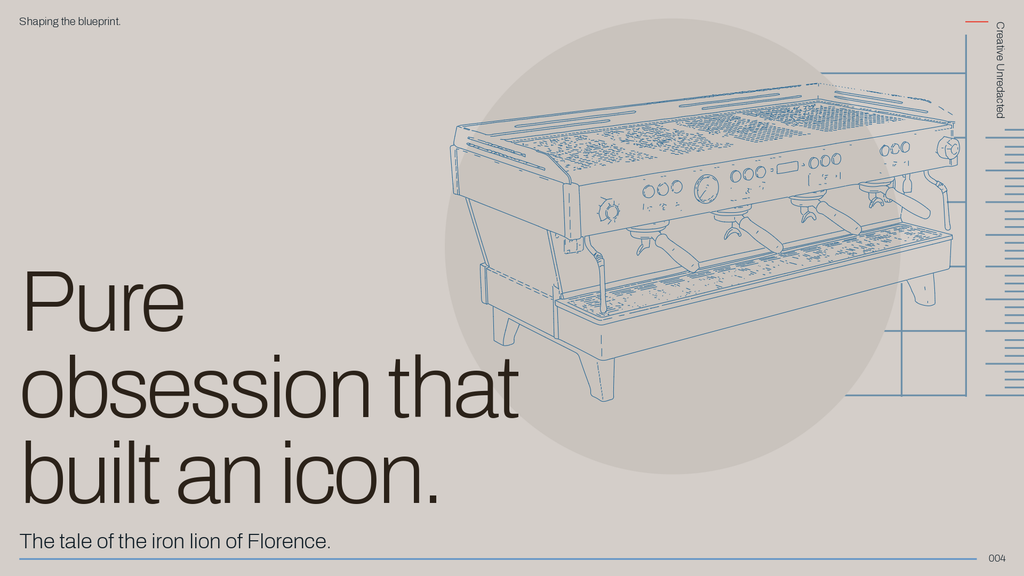
If you walk into a specialty coffee shop today, there is a high chance you will spot a heavy, angular block of stainless steel, pulsing with heat and stamped with a heraldic lion.
To the customer’s eye, it is just an expensive espresso machine. For me, it is a masterclass in brand connection.
Even in a crowded modern market, La Marzocco espresso machines maintain an enviable position in global coffee culture. They don’t run massive ad campaigns or engage in price wars with competitors. Yet, their products cost an absolute fortune and have a very loyal community.
They achieved this status by anchoring their entire existence into a single lane: mastery.
A symbol of devotion
In 1927, Giuseppe and Bruno Bambi opened a small metalworking workshop in Florence, Italy. They named it after the iconic lion sculpted by Donatello that symbolized the master-crafted Republic of Florence. This wasn’t a marketing move; it was a statement of intent.
From day one, the brothers approached the physics of coffee extraction as an obsession. They didn’t want to build pretty objects; they wanted to master coffee.
Turning the World on Its Side
When the Bambi brothers entered the market, every commercial espresso machine on earth was built vertically. As coffee consumption grew throughout the early 20th century, that vertical architecture made day-to-day operation slow and impractical for busy cafes.
In 1939, La Marzocco’s search for efficiency led them to lay the espresso boiler on its side. This breakthrough was a radical shift focused entirely on ergonomics and speed. It maximized coffee output, simplified the barista’s job, and as a byproduct, let the barista connect with the customer. La Marzocco changed the architecture of cafes forever.
The Currency of Respect
Obsessing over something builds an entirely different kind of connection with your audience. In 1978, a coffee enthusiast named Kent Bakke began importing La Marzocco machines into rainy Seattle. He famously lent a La Marzocco machine to a local cafe while repairing their standard Italian equipment. When Bakke tried to return their original machine, the baristas literally protested. They refused to let the La Marzocco go because the engineering produced a taste and a speed that couldn’t be faked.
That raw, underground respect laid the groundwork for an era of dominance. When a rapidly expanding Starbucks needed an industrial engine to power their massive global expansion in 1989, they didn’t look for the cheapest vendor. They chose La Marzocco because it was built to master high-volume efficiency without breaking down.
The True Lens of Mastery
In an era where “everything is already made,” we have to completely reframe what mastery actually means. It is rarely about technical complexity. Mastery is simply a chosen lane of execution.
In the car industry, BMW built its empire on mastering driving dynamics—The Ultimate Driving Machine. Volvo didn’t try to out-race them; instead, they anchored their entire existence into a completely different lane: human safety.
A guitarist like Santana can shred a complex solo that leaves an audience breathless. But then you look at Pharrell. He isn’t trying to out-play a virtuoso; he has obsessed over the architecture of a vibe.
This is the real lesson from the Florentine lion:
La Marzocco didn’t win because they found an empty market. They won because they out-obsessed everyone else in it.